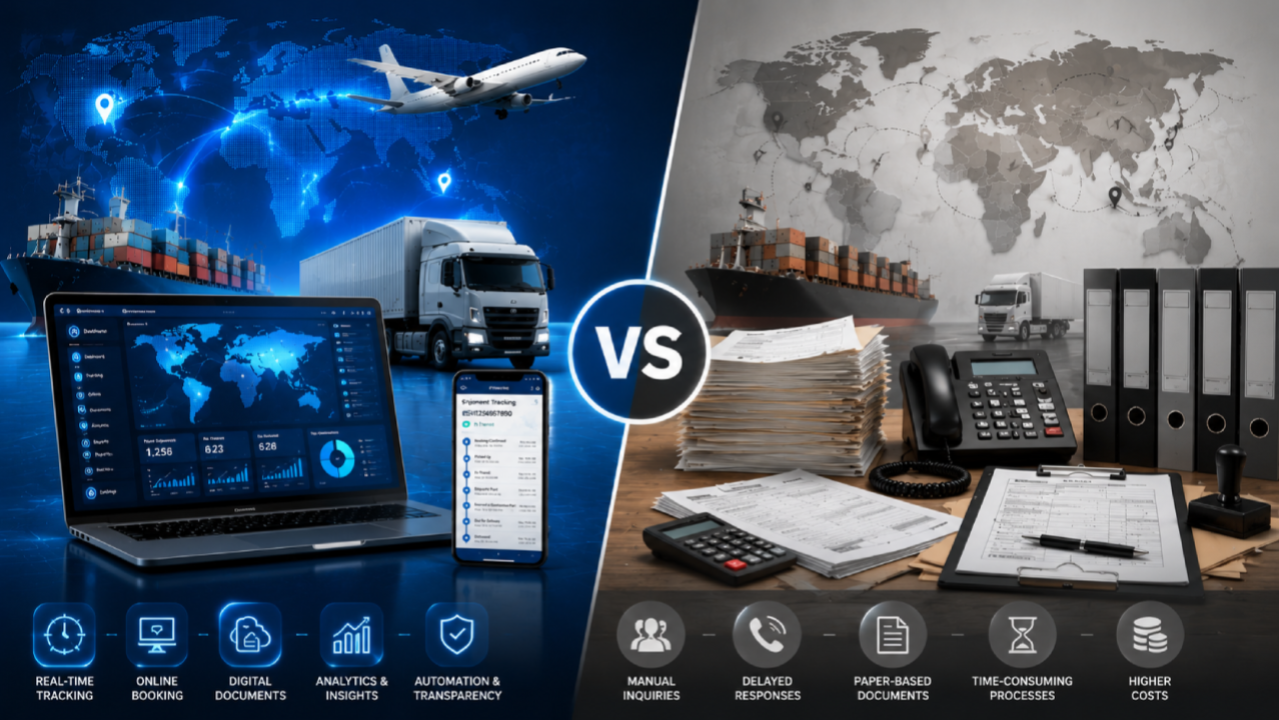
Global logistics is changing faster than ever. Businesses today need greater visibility, faster shipment updates, and better control over international shipping operations. This shift has created a growing debate between digital freight forwarding and traditional freight forwarding. While both models help move cargo across borders, they differ significantly in how shipments are booked, tracked, managed, and communicated. Understanding these differences can help importers, exporters, manufacturers, and eCommerce businesses choose the right logistics partner for their supply chain needs.
Digital freight forwarding uses technology to automate booking, tracking, documentation, and shipment management. Traditional freight forwarding relies on manual processes, personal communication, and logistics expertise. Businesses looking for speed, transparency, and automation often prefer digital solutions, while those handling complex cargo or specialized shipments may benefit from traditional freight forwarding services.
What Is Traditional Freight Forwarding?
Traditional freight forwarding has supported international trade for decades. In this model, freight forwarders coordinate cargo movement through direct communication with shipping lines, airlines, trucking companies, customs authorities, and warehouse operators.
Most activities are managed through emails, phone calls, and personal interactions. Shipment updates, documentation, customs clearance, and transportation planning often involve significant human involvement.
Key Features of Traditional Freight Forwarding
- Relationship-driven service
- Manual documentation and paperwork
- Communication through phone and email
- Customized logistics planning
- Strong industry connections
- Hands-on shipment management
- Experience-based problem solving
Traditional freight forwarding remains popular among businesses handling oversized cargo, project shipments, hazardous goods, and specialized logistics requirements.
What Is Digital Freight Forwarding?
Digital freight forwarding uses technology platforms to simplify and streamline logistics operations. Businesses can obtain freight rates, book shipments, track cargo, manage documents, and monitor supply chain performance through a centralized online platform.
The objective is to improve visibility, reduce delays, minimize paperwork, and provide greater control over shipping operations.
Key Features of Digital Freight Forwarding
- Online shipment booking
- Instant freight quotations
- Real-time cargo tracking
- Automated documentation
- Cloud-based logistics dashboards
- Data analytics and reporting
- Centralized shipment management
As global supply chains become more complex, digital freight forwarding is helping businesses manage logistics more efficiently.
Digital Freight Forwarding vs Traditional Freight Forwarding: Comparison Table
| Feature | Digital Freight Forwarding | Traditional Freight Forwarding |
|---|---|---|
| Shipment Booking | Online and automated | Manual process |
| Freight Quotes | Instant pricing | Usually takes longer |
| Shipment Tracking | Real-time visibility | Periodic updates |
| Documentation | Automated and digital | Manual paperwork |
| Communication | Platform-based | Calls and emails |
| Transparency | High visibility | Limited visibility |
| Customer Support | Digital and human support | Dedicated personal support |
| Scalability | Highly scalable | Depends on operational capacity |
| Decision Making | Data-driven | Experience-driven |
| Complex Shipments | May require extra support | Often better suited |
Benefits of Digital Freight Forwarding
The growing demand for speed and visibility has encouraged many businesses to adopt digital logistics solutions.
Faster Freight Management
Digital platforms eliminate many manual tasks involved in obtaining quotations, booking shipments, and preparing shipping documents. This speeds up logistics operations and reduces administrative workload.
Real-Time Shipment Visibility
One of the biggest advantages of digital freight forwarding is complete shipment transparency. Businesses can track cargo movement at every stage and receive updates instantly.
This visibility helps improve inventory planning and customer communication.
Improved Operational Efficiency
Automation reduces repetitive work and lowers the risk of human errors in documentation, shipment scheduling, and reporting.
Better Data and Analytics
Digital freight forwarding platforms provide insights into:
- Freight spending
- Carrier performance
- Transit times
- Shipment delays
- Logistics trends
These insights help businesses make better supply chain decisions.
Easier Document Management
Shipping documents, customs paperwork, invoices, and compliance records can be stored and accessed digitally, reducing paperwork and improving organization.
Advantages of Traditional Freight Forwarding
Despite advances in logistics technology, traditional freight forwarding continues to offer several important benefits.
Personalized Customer Support
Businesses often value direct access to experienced logistics professionals who understand specific shipping requirements and industry challenges.
Expertise in Complex Logistics
Certain shipments require detailed planning and coordination, including:
- Project cargo
- Oversized freight
- Heavy machinery
- Dangerous goods
- Temperature-controlled shipments
Traditional freight forwarders often provide the expertise needed for these specialized movements.
Strong Industry Relationships
Long-standing relationships with carriers, customs authorities, and transport providers can help resolve issues quickly and improve shipment reliability.
Flexible Problem Solving
Unexpected disruptions can occur during international transportation. Experienced freight professionals can often identify practical solutions faster than automated systems alone.
Which Freight Forwarding Model Is More Cost Effective?
Cost effectiveness depends on the nature of your logistics operations.
Digital freight forwarding typically reduces administrative expenses through automation and streamlined workflows. Businesses with regular shipment volumes often benefit from improved efficiency and lower operational costs.
Traditional freight forwarding may provide better value for businesses managing specialized cargo, custom logistics projects, or shipments that require extensive coordination.
Rather than focusing only on freight rates, businesses should evaluate:
- Service quality
- Shipment visibility
- Customer support
- Reliability
- Transit performance
- Operational efficiency
The lowest freight rate does not always deliver the best overall value.
How Technology Is Transforming Freight Forwarding
Technology is reshaping global logistics and supply chain management.
Several innovations are driving this transformation:
- Artificial Intelligence (AI)
- Real-time cargo tracking
- Cloud-based logistics software
- Electronic documentation
- Predictive analytics
- Supply chain visibility tools
- Automated customs processes
These technologies help freight forwarders improve efficiency, reduce delays, and provide better customer experiences.
Technology is not replacing freight forwarders. Instead, it is enhancing their ability to deliver reliable logistics services.
Which Freight Forwarding Solution Is Right for Your Business?
The right choice depends on your shipping volume, cargo type, and operational priorities.
Choose Digital Freight Forwarding If You:
- Need real-time shipment visibility
- Ship frequently across international markets
- Prefer automated workflows
- Want data-driven logistics insights
- Need faster access to freight rates and updates
Choose Traditional Freight Forwarding If You:
- Handle specialized or oversized cargo
- Require customized logistics planning
- Value direct communication with experts
- Need support for complex supply chain challenges
- Prefer relationship-based service
Consider a Hybrid Approach
Many businesses are finding success with a hybrid logistics model.
Modern freight forwarders increasingly combine advanced technology with experienced logistics professionals. This approach provides the visibility and efficiency of digital platforms while maintaining the expertise and personalized support of traditional freight forwarding.
Conclusion
The discussion around digital freight forwarding vs traditional freight forwarding is not about replacing one model with another. Both approaches offer unique advantages depending on business requirements.
Digital freight forwarding delivers speed, automation, visibility, and operational efficiency. Traditional freight forwarding provides industry expertise, personalized service, and customized logistics solutions.
As supply chains continue to evolve, businesses should focus on choosing a logistics partner that aligns with their operational goals, shipment requirements, and growth plans. Whether you choose a digital platform, a traditional freight forwarder, or a hybrid solution, the objective remains the same: moving cargo efficiently, reliably, and cost-effectively across global markets.